A chandelier can completely change the atmosphere of a room. It might be the first thing guests notice when they enter a two-story foyer, or the finishing touch that makes a hotel lobby feel special. But when the fixture is too high to reach, even a simple task like replacing a bulb or cleaning the crystals can turn into a major project.

That is usually when people start asking how to raise a chandelier, how to adjust its hanging height, or whether a chandelier lift system is worth installing.
The answer depends on what you actually need to do. Raising a chandelier back into position after maintenance is different from permanently adjusting its hanging height. And if you have an older fixture that needs more than a quick cleaning, you may be planning a chandelier makeover rather than routine maintenance.
In this guide, we’ll look at the available options, explain what a manual chandelier lift system can and cannot do, and show how a motorized lift can make recurring maintenance easier in high-ceiling spaces.
What Does It Mean to Raise a Chandelier?
The phrase “raise a chandelier” can describe two different jobs.
The first is changing how high the chandelier hangs in the room. For example, a fixture above a dining table might hang too low, or a new furniture layout might make its original position feel awkward. In this case, the suspension length may need to be adjusted.
The second is lifting a chandelier upward after it has been lowered for cleaning, repairs, or other maintenance. This is where a dedicated chandelier lifting system may be useful, particularly in rooms with high or vaulted ceilings.
Before choosing a solution, work out which problem you’re trying to solve.
Adjusting the Permanent Hanging Height
If your chandelier hangs too low, the solution may involve shortening the chain, changing a compatible downrod, or adjusting the suspension arrangement. The correct approach depends on the fixture’s design, weight, mounting hardware, and electrical connections.
A decorative chandelier should not simply be pushed upward or pulled into a higher position while its weight is hanging from an unknown support. The fixture needs to remain properly supported, and any electrical work must be handled appropriately.
For heavy chandeliers, hardwired fixtures, or installations above stairwells, consult a qualified electrician or lighting installer before changing the suspension length.
Raising a Chandelier After Maintenance
If the chandelier has been lowered for cleaning or inspection, raising it means returning it to its intended ceiling position using the lifting equipment designed for that installation.

A dedicated chandelier lift can make this process much more convenient when the system is correctly matched to the fixture and installed according to its specifications.
This is particularly useful when a chandelier needs regular attention but is too high to reach comfortably from the floor.
How to Raise a Chandelier in a High-Ceiling Room
The right approach depends on the chandelier, the ceiling structure, and the equipment already installed.
1. Check How the Chandelier Is Supported
Start by identifying how the fixture is mounted. Some chandeliers hang from decorative chains, while others use rigid rods or specialized suspension assemblies. A chandelier installed with a dedicated lift has a different arrangement from one attached directly to a ceiling mounting bracket.
You should also establish the fixture’s total installed weight and identify the supporting structure.
This matters because the appearance of a mounting point alone does not tell you how much weight it can safely carry.
2. Check How the Chandelier Is Supported
If you want the chandelier to hang permanently higher, you may need a suspension adjustment.
If you want to bring it down for cleaning and then return it to the ceiling, a chandelier lowering system may be a more appropriate solution.
These approaches solve different problems. A conventional chain adjustment is not a substitute for a purpose-designed lifting mechanism, and a maintenance lift should not automatically be assumed to provide every type of decorative height adjustment.
3. Check How the Chandelier Is Supported
A chandelier installed in a room with a 9-foot ceiling presents a different access problem from one suspended above a 20-foot foyer or a two-story staircase.
Think about how far the fixture needs to travel to reach a comfortable working position. It may not need to reach the floor; the required travel depends on the work being performed and the size and design of the chandelier.
For a high-ceiling installation, also consider the available space above the ceiling, the mounting structure, cable routing, electrical arrangements, and access for installation and future servicing.
4. Check How the Chandelier Is Supported
A general-purpose winch, an improvised pulley, or an unsecured rope should not be treated as a chandelier lift simply because it can move a load vertically.
The lifting equipment needs to be suitable for the fixture’s weight and movement, with appropriate mounting provisions and safety mechanisms. Operation should follow the equipment manufacturer’s instructions.
Keep people clear of the suspended load and its travel path. Never bypass a locking mechanism or attempt to correct a moving, unstable chandelier by hand.
If the system moves unevenly, makes unusual noises, or shows signs of cable or mechanical damage, stop and arrange a qualified inspection.
For new high-ceiling projects, a purpose-designed motorized chandelier lift system may be worth considering before the ceiling and lighting installation are finalized.
What Is a Manual Chandelier Lift System?
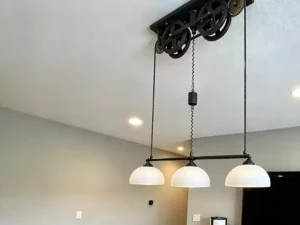
A manual chandelier lift system is a lifting arrangement operated by hand rather than by an electric motor. Depending on the design, it may use pulleys, a hand-operated winch, cables, or a counterbalancing arrangement.
The main appeal is straightforward: a manual mechanism does not rely on an electric motor to move the fixture.
However, the word “manual” does not tell you whether a system is suitable for a particular chandelier. Designs vary considerably, and a basic pulley should never be assumed to have the same load capacity, locking arrangement, or electrical configuration as a purpose-designed chandelier lifting product.
Before considering a manual chandelier lift system, ask these questions:
- What is the manufacturer’s rated load capacity?
- Is the complete system designed for the weight and type of chandelier being installed?
- How is the load secured when the chandelier is stationary?
- How is the system mounted to the building structure?
- How are the electrical connections managed as the fixture moves?
- Can the intended operator use the system as specified without entering an unsafe working position?
- What inspection and maintenance does the manufacturer require?
A manual mechanism may suit certain lightweight fixtures or specialized installations when it is properly engineered for the application. It should not be selected simply because it appears inexpensive or easy to assemble.
For a heavy crystal chandelier, a large foyer fixture, or a commercial installation that requires regular maintenance, the complete lifting and safety arrangement deserves particular attention.
Motorized vs Manual Chandelier Lift: Which Makes More Sense?
Both manual and motorized systems can be used to move compatible lighting fixtures, but they are not interchangeable in every installation.
The important question is not just which mechanism costs less initially. It is how the fixture will be used, how frequently it needs maintenance, and whether the entire system is suitable for the load and installation environment.
There is no universal answer that a manual mechanism is always unsuitable or that every motorized unit is automatically safe. The rating, construction, installation, and operating instructions of the actual system matter more than the label alone.
A motorized lift can be particularly convenient when a chandelier is installed in a high foyer, hotel lobby, church, or other space where routine access would otherwise require substantial temporary access equipment.
For a more detailed discussion of operating methods, safety considerations, and ownership costs, read our existing guide: Motorized Chandelier Hoist vs. Manual Chandelier Pulley System: Safety & Cost Comparison.
Planning a Chandelier Makeover? Start With Access and Condition
A chandelier makeover does not always mean buying a new fixture.
Sometimes the frame is still beautiful, but the crystals have lost their sparkle. The bulbs may produce the wrong color of light, the finish may look dated, or the fixture may no longer suit a renovated room.
Before deciding what to change, inspect the chandelier and make a clear list of the work required.

Clean the Crystals and Decorative Components
Dust, fingerprints, and residue can make a crystal chandelier look dull, particularly when natural light enters through nearby windows.
Once the fixture has been brought to an appropriate working height, cleaning can be planned more carefully. The correct cleaning method depends on the material, finish, and manufacturer’s care instructions. Delicate surfaces may not tolerate the same products or techniques as ordinary glass.
Avoid applying liquids to electrical components, and make sure the fixture is safely isolated from the power supply before cleaning. Electrical inspection or repair should be handled by a qualified professional.
For more practical advice, see our guide to cleaning a chandelier on a high ceiling.
Update the Bulbs and Light Quality
The appearance of a chandelier depends on more than its crystals and metalwork. Bulb color temperature, brightness, beam characteristics, and compatibility with the fixture can all affect the final atmosphere.
For example, a formal foyer may benefit from a warm, welcoming appearance, while a large commercial lobby may have different illumination requirements.
Check the fixture manufacturer’s specifications before choosing replacement bulbs. Do not exceed the permitted wattage or use lamps that are incompatible with the electrical or dimming system.
Review the Finish, Shades, and Decorative Details
Depending on the fixture, a makeover might include refreshing the finish, replacing compatible shades, restoring loose decorative elements, or updating the surrounding interior design.
Before adding crystals, ornaments, or other accessories, account for the extra weight. A chandelier that looks unchanged after a makeover may have a different installed load.
The suspension system and any associated lifting equipment must remain suitable for the revised configuration. When in doubt, have the completed fixture assessed before returning it to service.
Think About the Next Maintenance Visit
A beautifully restored chandelier still needs occasional attention.
If it hangs over a staircase or in a two-story foyer, ask how the next cleaning, bulb replacement, or inspection will be carried out. A makeover is an ideal time to consider long-term maintenance access rather than leaving the same problem for later.
Where the building and fixture are suitable, a dedicated chandelier lift system may allow the chandelier to be lowered for maintenance and raised back into its installed position without removing the entire fixture.
The exact benefits depend on the lifting model, the chandelier, the ceiling structure, and the installation design.
How to Choose a Chandelier Lift System for Your Project
If you are considering a lift for a residential or commercial project, collect the basic information before choosing a model.
Chandelier Weight
Find the total installed weight, including decorative elements and any accessories that will remain attached during lifting. Use reliable product information rather than estimating from the chandelier’s appearance.
The final model selection must follow the manufacturer’s load specifications and the requirements of the complete installation.
Required Lifting Travel
Measure the ceiling height and determine the working position required for the planned maintenance. A chandelier does not necessarily need to reach the floor to provide useful access.
If the ceiling is unusually high or the chandelier is particularly large, confirm the available travel range with the supplier.
Ceiling Structure and Installation Space
Identify whether the installation involves accessible attic space, wooden joists, steel framing, a concrete slab, or a concealed ceiling cavity.
The mounting arrangement must be compatible with the structure and the specified installation method. Do not assume that a motorized unit can simply be attached to an existing ceiling bracket.
Electrical and Control Requirements
Confirm the available supply voltage and frequency, control options, and the required electrical arrangements for the exact model.
Ask how electrical power is managed during movement, how the fixture is secured in its raised position, and which safety features are provided.
These details should be documented in the technical specifications rather than inferred from a product photograph.
Future Maintenance and Servicing
Consider how often the chandelier will need to be cleaned or inspected, who will operate the equipment, and how the lift will be serviced.
For projects involving a hotel lobby, church, event venue, or other high-ceiling environment, it can be helpful to settle the lifting requirements during the planning stage rather than attempting to retrofit a solution after the chandelier has been installed.
If you are specifying equipment for a renovation or new-build project, AMZHO‘s chandelier lift product range provides a starting point for reviewing available systems and discussing project-specific requirements.
Make Your Next Chandelier Maintenance Project Easier
A chandelier should be a feature that people enjoy, not a fixture that becomes difficult to maintain every time a bulb needs replacing or the crystals need attention.
Whether you are planning a chandelier makeover, adjusting an existing fixture, or specifying equipment for a new high-ceiling project, begin with the weight, mounting arrangement, electrical requirements, and access needed for future maintenance.
A suitable lifting solution can make recurring maintenance more convenient when it is correctly selected and professionally installed.
Explore AMZHO’s motorized chandelier lift systems to review available options and discuss the requirements of your project.