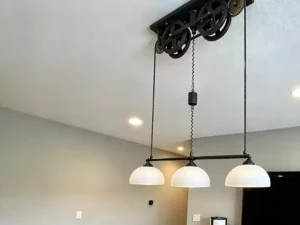
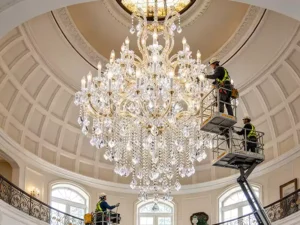
Đèn nâng có thể chỉ các loại sản phẩm liên quan đến chiếu sáng khác nhau. Các sản phẩm này bao gồm bộ đèn LED được lắp đặt trên cầu nâng ô tô, hệ thống cơ giới dùng để nâng hạ các thiết bị chiếu sáng gắn trần, và đèn an toàn hoặc đèn làm việc di động. Thiết bị nâng đèn cơ giới được thiết kế chuyên dụng để di chuyển thiết bị chiếu sáng gắn trần tương thích nhằm mục đích bảo trì, chứ không phải để cung cấp ánh sáng trực tiếp.
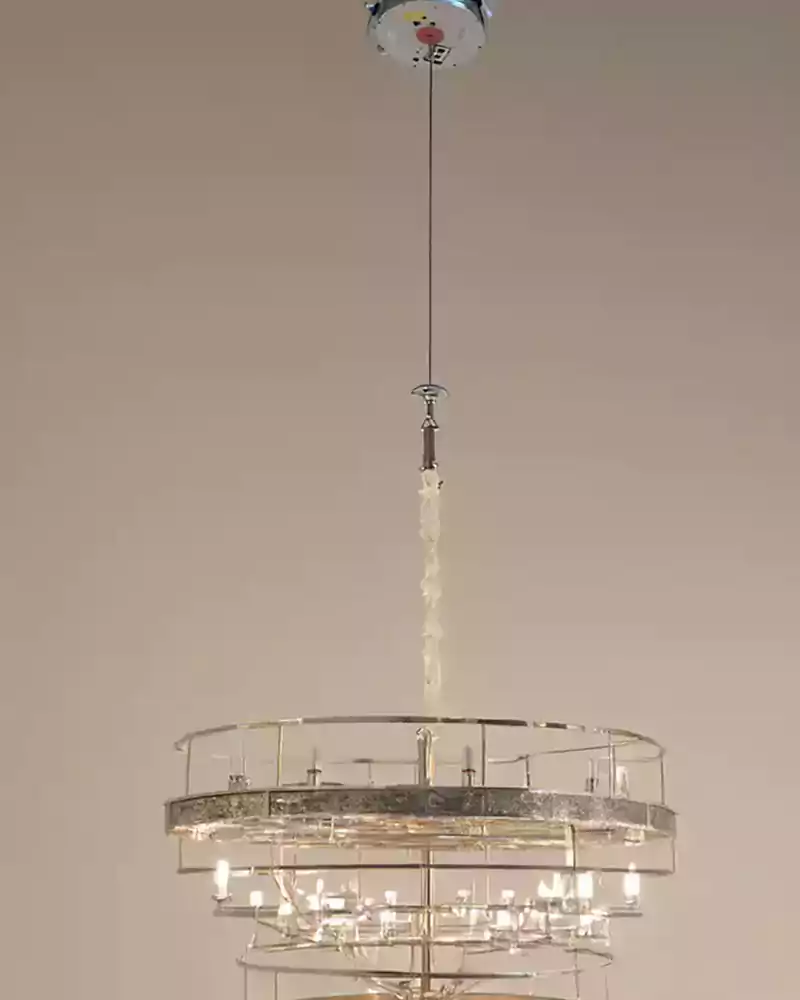
Hãy tìm kiếm từ khóa “lift light” và bạn có thể sẽ bắt gặp một số sản phẩm khác biệt đến bất ngờ.
Trong một xưởng sửa chữa ô tô, thuật ngữ này có thể dùng để chỉ các đèn LED được gắn vào cầu nâng xe nhằm chiếu sáng phần gầm xe. Trong một ngôi nhà có trần cao, thuật ngữ này có thể dùng để chỉ hệ thống điều khiển bằng động cơ giúp hạ thấp đèn chùm hoặc đèn trần xuống để bảo trì. Trong môi trường làm việc công nghiệp, cùng một từ khóa tìm kiếm có thể dẫn đến các kết quả như đèn cảnh báo trên xe nâng, đèn gắn trên mũ bảo hộ hoặc đèn làm việc di động.
Tất cả các thiết bị này đều liên quan đến việc chiếu sáng và nâng hạ theo một cách nào đó, nhưng chúng được thiết kế để phục vụ cho các công việc hoàn toàn khác nhau.
Vậy, thực ra bạn cần loại đèn nâng nào?
Bước đầu tiên là tìm hiểu chức năng của từng sản phẩm. Hướng dẫn này giải thích các loại chính, nơi sử dụng chúng và những yếu tố cần cân nhắc khi lựa chọn thiết bị nâng đèn có động cơ dành cho đèn treo trần.
Đèn Lift Light là gì?
“Đèn nâng” là một thuật ngữ tìm kiếm chung chứ không phải tên của một sản phẩm cụ thể nào. Tùy thuộc vào mục đích sử dụng, thuật ngữ này có thể chỉ hệ thống chiếu sáng được lắp đặt trên thiết bị nâng, cơ chế nâng hạ đèn chiếu sáng, hoặc đèn làm việc được sử dụng trong các hoạt động nâng hạ công nghiệp.
Cần phân biệt ba cách hiểu phổ biến sau đây:
- Hệ thống chiếu sáng cho cầu nâng ô tô: Dải đèn LED hoặc đèn làm việc được lắp đặt trên cầu nâng ô tô để chiếu sáng khu vực bên dưới chiếc xe đang được nâng lên.
- Thiết bị nâng đèn trần chạy điện: Hệ thống nâng hạ chạy điện dùng để nâng lên và hạ xuống các thiết bị chiếu sáng gắn trần, đèn chùm hoặc một số loại đèn chiếu sáng khu vực cao.
- Đèn an toàn và đèn làm việc: Các sản phẩm chiếu sáng di động hoặc có thể đeo trên người, chẳng hạn như đèn gắn trên mũ bảo hộ và đèn cảnh báo trên xe nâng, được sử dụng để cải thiện tầm nhìn trong môi trường làm việc.
Các sản phẩm này không có cùng chức năng. Đèn được lắp trên bệ nâng ô tô có tác dụng chiếu sáng khu vực làm việc, trong khi hệ thống nâng đèn trần điều khiển bằng động cơ lại di chuyển chính thiết bị chiếu sáng đó.
Nếu mục tiêu của bạn là hạ thấp một chiếc đèn chùm hoặc đèn trần treo cao xuống để vệ sinh, thay bóng đèn hoặc kiểm tra, thì rất có thể bạn đang tìm kiếm một thiết bị nâng đèn có động cơ hoặc hệ thống nâng đèn trần.
1. Đèn cho cầu nâng ô tô: Hệ thống chiếu sáng dành cho cầu nâng ô tô và nhà để xe
Tại các xưởng sửa chữa ô tô, các kỹ thuật viên thường phải làm việc bên dưới những chiếc xe được nâng lên bằng cầu nâng hai cột hoặc bốn cột.

Ngay cả khi có đèn chiếu sáng trên trần xưởng, phần gầm xe vẫn có thể khó quan sát. Chính chiếc xe đã che khuất phần lớn ánh sáng, khiến các khu vực xung quanh động cơ, hệ thống treo, hệ thống ống xả và các bộ phận khác vẫn chìm trong bóng tối.
Bộ đèn chiếu sáng cho bàn nâng ô tô giải quyết vấn đề này bằng cách cung cấp ánh sáng gần khu vực làm việc hơn.
Cách thức hoạt động của hệ thống chiếu sáng cho cầu nâng ô tô
Các hệ thống này thường sử dụng dải đèn LED, thanh đèn hoặc các loại đèn làm việc khác được gắn vào kết cấu của cầu nâng ô tô.
Mục đích là chiếu sáng những khu vực mà đèn trần không thể chiếu sáng hiệu quả.
Tùy thuộc vào bộ sản phẩm, hệ thống chiếu sáng có thể được lắp đặt dọc theo các cột nâng, đường chạy hoặc các bề mặt phù hợp khác. Một số sản phẩm được thiết kế riêng cho các loại cầu nâng xe hai cột hoặc bốn cột.
Trước khi lựa chọn bộ đèn chiếu sáng cho cầu nâng ô tô, xưởng sửa chữa cần xem xét các yếu tố sau:
– Khả năng tương thích với mẫu cầu nâng xe.
– Phạm vi chiếu sáng dưới gầm xe với các kích thước xe khác nhau.
– Cách đi dây cáp và nguồn điện.
– Khả năng chịu được môi trường làm việc, bao gồm bụi, dầu và các quy trình vệ sinh.
– Các vị trí lắp đặt không cản trở hoạt động của thang máy.
Đèn nâng ô tô rất hữu ích cho các thợ cơ khí, cơ sở kiểm định xe, xưởng sửa chữa và gara.
Tuy nhiên, chúng không dùng để nâng hoặc hạ các thiết bị chiếu sáng gắn trên trần. Nhiệm vụ của chúng là giúp quan sát rõ hơn khu vực bên dưới một chiếc xe đang được nâng lên.
Nếu bạn tìm kiếm từ khóa “đèn nâng” vì cần tầm nhìn tốt hơn dưới gầm xe, thì bộ đèn LED nâng dành cho ô tô chính là danh mục sản phẩm phù hợp.
2. Thiết bị nâng đèn trần có động cơ: Di chuyển chính bộ đèn
Một thiết bị nâng đèn trần chạy bằng động cơ giúp giải quyết một vấn đề khác.
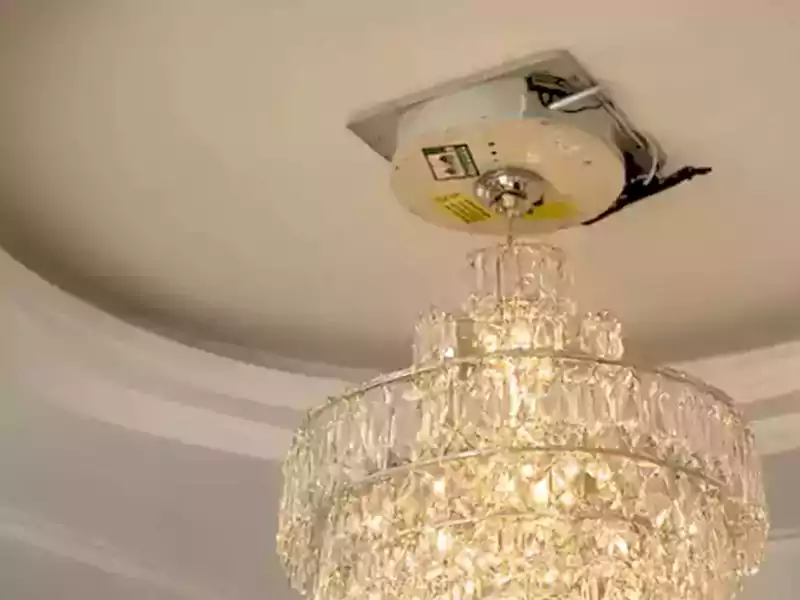
Thay vì lắp thêm đèn vào máy nâng, thiết bị này sử dụng cơ chế nâng có động cơ để di chuyển bộ đèn đã lắp đặt lên hoặc xuống.
Loại thiết bị này đặc biệt hữu ích trong những trường hợp đèn chùm, đèn trang trí hoặc đèn treo cao khó tiếp cận sau khi lắp đặt.
Hãy tưởng tượng một sảnh khách sạn với chiếc đèn chùm pha lê lớn treo lơ lửng cách sàn nhà vài mét. Chiếc đèn chùm đó có thể trông rất đẹp, nhưng việc lau chùi các viên pha lê hay thay bóng đèn có thể đòi hỏi sự chuẩn bị khá công phu.
Một thiết bị nâng nhẹ có động cơ mang lại một phương án khác để giải quyết vấn đề bảo trì đó.
Thang nâng đèn có động cơ hoạt động như thế nào?
Một thiết bị nâng nhẹ có động cơ điển hình bao gồm bộ truyền động điện, cơ cấu nâng, cụm cáp, các bộ phận lắp đặt và hệ thống điều khiển.
Cấu hình cụ thể có thể khác nhau tùy theo nhà sản xuất và mẫu máy.
Trong quá trình vận hành, động cơ sẽ điều khiển cơ cấu nâng hạ để hạ thiết bị kẹp tương thích xuống vị trí làm việc thuận tiện hơn. Sau khi hoàn tất việc bảo trì, hệ thống sẽ nâng thiết bị kẹp trở lại vị trí trần nhà đã định sẵn.
Tùy thuộc vào thiết kế, các tùy chọn điều khiển có thể bao gồm điều khiển từ xa, công tắc gắn tường hoặc một giao diện tương thích khác.
Một số hệ thống lắp đặt còn tích hợp cơ chế khóa cơ học hoặc các cơ chế an toàn khác để giữ cố định thiết bị ở vị trí nâng cao theo thiết kế.
Hệ thống phải được lựa chọn và lắp đặt dựa trên tổng trọng lượng của đèn, hành trình yêu cầu, kết cấu trần, hệ thống điện và các thông số kỹ thuật của nhà sản xuất.
Hệ thống nâng đèn trần được sử dụng ở đâu?
Thang máy chiếu sáng có động cơ không chỉ giới hạn ở các đèn chùm trang trí. Ứng dụng của chúng phụ thuộc vào thiết kế của thiết bị và loại đèn chiếu sáng mà nó được thiết kế để nâng đỡ.
Sảnh vào của các căn hộ và những ngôi nhà có trần cao
Các loại đèn treo lớn và đèn chùm có thể khó tiếp cận trong sảnh hai tầng, khu vực cầu thang và phòng khách có trần vòm. Một hệ thống nâng phù hợp có thể giúp việc lên kế hoạch cho một số công việc bảo trì trở nên dễ dàng hơn.
Khách sạn và sảnh thương mại
Hotels often feature decorative lighting in reception areas, entrances, banquet halls, and other high-ceiling spaces.
A motorized chandelier lift can provide a more convenient maintenance arrangement for compatible fixtures that need regular cleaning and inspection.
Churches and large assembly spaces
Large decorative or architectural lighting fixtures may hang above seating areas or open interior spaces. Access requirements should be considered during the lighting design stage.
Theaters and exhibition centers
Lighting systems in these venues can include complex installations at significant heights. A suitable lifting arrangement may help with maintenance planning, depending on the type of fixture and its installation.
Warehouses and industrial facilities
High-bay lighting is often installed well above normal working areas. Certain industrial lighting lifters are designed to lower compatible fixtures for inspection, cleaning, or servicing.
The required lifting capacity, travel distance, mounting configuration, and control arrangement can differ substantially from those of a residential chandelier lift.
3. High Bay Light Lifts: A Different Approach to Industrial Lighting Maintenance
The term high bay light can sometimes cause confusion when searching for a lift light.
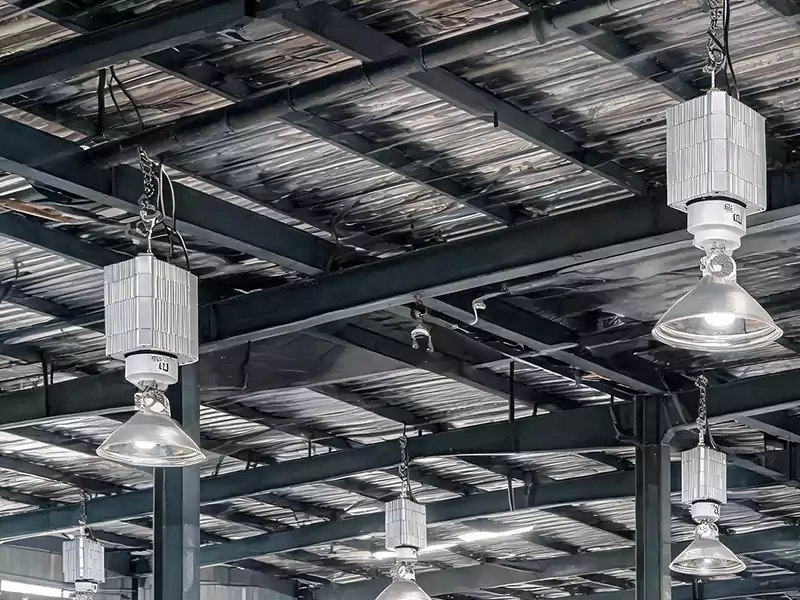
A high-bay light is the lighting fixture itself, typically used in spaces such as warehouses, factories, distribution centers, and sports halls with high ceilings.
A high bay light lift, on the other hand, is a mechanism designed to move a compatible fixture between its installed position and a more accessible maintenance position.
These are two different products with different purposes.
Why Consider a High Bay Light Lifter?
In a warehouse or factory, lighting fixtures may be installed several meters above the floor.
Traditional maintenance may involve arranging elevated access equipment, coordinating work at height, and temporarily restricting access to part of the facility.
A purpose-designed lighting lifter offers an alternative for compatible installations.
Rather than permanently bringing people and access equipment to the ceiling, the system is designed to bring the fixture down for the required maintenance task.
This may be particularly useful where lighting fixtures are installed in difficult-to-access areas or where repeated maintenance is expected.
What Should Industrial Buyers Consider?
Industrial projects need careful technical assessment.
Important details include the fixture’s weight, installation height, lifting travel, available ceiling space, cable routing, environmental conditions, and electrical configuration.
A warehouse with a standard LED high-bay fixture will not necessarily need the same system as a large industrial installation with heavier equipment.
The lifting equipment should be selected for the specific luminaire and mounting arrangement rather than assuming that one model will suit every high-bay application.
For an example of this product category, see the AMZHO motorized high-bay lighting lifter system.
4. Safety and Work Lights: Hard Hat Lights, Forklift Lights, and Portable Lighting
Another group of products sometimes appears in searches for lift light.
These products are intended to improve visibility or communicate hazards in industrial environments. They do not necessarily have any fixture-lifting function.
Hard Hat Lights
Hard hat lights are compact lighting devices attached to safety helmets.
They help workers illuminate the area they are looking at while keeping both hands available for the task.
They are commonly used in construction, maintenance, inspection, and other environments where general lighting may not be sufficient.
When choosing one, consider brightness, beam pattern, battery life, attachment compatibility, and the working environment.
Forklift Safety Lights
Forklift safety lights are designed to improve awareness of moving industrial vehicles.
Depending on their design, they may project colored warning zones, spots, or lines onto the floor near the vehicle.
They can help alert pedestrians to the presence or movement of a forklift, although their effectiveness depends on visibility, workplace layout, and the site’s broader traffic-management procedures.
Portable Industrial Work Lights
Portable work lights provide temporary illumination in locations where permanent lighting is unavailable or insufficient.
They may be used during equipment servicing, inspections, construction work, or maintenance in confined areas.
The right product depends on the task, required brightness, mounting arrangement, power supply, and environmental rating.
These safety and work lights solve visibility problems. They should not be confused with motorized light lifts, which are designed to move ceiling-mounted fixtures.
5. Automotive Lift Lights vs. Motorized Ceiling Light Lifts: What Is the Difference?
Although both product categories contain the words “lift” and “light,” their operating principles are quite different.
| So sánh | Automotive Lift Light | Motorized Ceiling Light Lift |
| Mục đích chính | Illuminate the area around or beneath a raised vehicle | Raise and lower a ceiling-mounted light fixture |
| Typical location | Automotive workshops and garages | Homes, hotels, commercial buildings, warehouses, and industrial facilities |
| Main component | LED strips, light bars, and mounting accessories | Electric motor, lifting mechanism, cable assembly, and control components |
| What moves? | The light may be mounted or adjusted on the vehicle lift | The ceiling-mounted light fixture |
| Primary users | Auto mechanics, garages, vehicle inspection facilities | Lighting contractors, facility teams, project engineers, and building owners |
| Main purchase consideration | Brightness, coverage, mounting, and power supply | Load capacity, lifting travel, ceiling structure, controls, and safety arrangements |
The biggest difference is simple: one product helps people see beneath a vehicle, while the other brings an installed light fixture within reach.
If you are planning a garage lighting upgrade, an automotive LED lift-light kit may be what you need.
If you are maintaining a chandelier or high-mounted luminaire, look for a motorized lighting lifter instead.
6. How to Choose the Right Motorized Light Lift
Once you have established that you need to move a ceiling-mounted fixture, the next step is selecting the correct equipment.
There is no single model that fits every chandelier or industrial lighting installation.
A few technical details will help narrow down the options.
Confirm the Total Fixture Weight
Start with the complete weight of the fixture that will be lifted.
For a chandelier, include decorative components and accessories that remain attached during operation. For industrial lighting, confirm the actual luminaire weight and mounting arrangement.
Always use the equipment’s specified rated capacity and leave the final selection to a qualified technical assessment.
Determine the Required Lifting Travel
The ceiling height and the maintenance position are not necessarily the same measurement.
For example, a chandelier may be installed above a two-story entrance but only need to descend far enough for a technician to clean its crystals comfortably.
Industrial installations may require a different travel range depending on the fixture’s size and the work being performed.
Measure the required distance before requesting a quotation.
Check the Ceiling Structure
A motorized ceiling light lift needs a suitable supporting structure.
Possible installation conditions include wooden framing, steel beams, concrete structures, and concealed ceiling spaces.
The mounting arrangement must be designed for the actual building structure and the lifting load. A decorative ceiling or an existing light-fixture bracket should not automatically be assumed suitable for supporting a lifting system.
Review the Control and Electrical Requirements
Some systems use remote controls, while others may support wall-mounted switches or wired control arrangements.
The available supply voltage, frequency, motor requirements, and fixture electrical connections should all be confirmed.
For more complicated installations, discuss the electrical design with the supplier and a qualified electrician before purchasing.
Understand the Safety Features
A lifting system should be evaluated as a complete assembly rather than by looking at the motor alone.
Ask about the specified load rating, mechanical locking arrangements, braking system, overload protection, cable configuration, and operating instructions.
The exact features differ between models, so request the technical documentation for the particular system under consideration.
Consider Future Maintenance
Think about how often the fixture will need attention.
A chandelier in a private home may only require occasional cleaning, while a hotel lobby or commercial facility may have a more regular maintenance schedule.
This difference can affect the type of equipment, control method, installation arrangement, and service support that makes sense for the project.
If you are still at the design stage, consider the lifting system before the ceiling and lighting installation are finalized.
AMZHO: Motorized Lighting Lift Solutions for High-Ceiling Applications
For projects that require the light fixture itself to move, AMZHO specializes in motorized lighting lifting equipment.
Our product range covers general lighting lifters, chandelier lift systems, and high-bay lighting lifting solutions for residential, commercial, and industrial applications.
Depending on the project, different lifting configurations can be considered according to:
- Required load capacity.
- Lifting height and travel.
- Ceiling or mounting structure.
- Remote, wired, or other supported control options.
- Installation space and environmental requirements.
- Model-specific safety features.
For chandelier applications, a motorized lift can make it easier to lower a compatible fixture for cleaning, bulb replacement, and inspection.
For industrial environments, selected lighting lifters can help bring compatible high-mounted fixtures down for maintenance.
AMZHO also supports customized project discussions and OEM/ODM requirements for contractors, distributors, and lighting equipment companies.
If you are looking for a suitable system, start with the AMZHO lighting lifter range or explore our motorized chandelier lift solutions.
Find the Right Lift Light for Your Application
The phrase “lift light” can lead to several different products, which is why it is worth identifying the actual job before choosing equipment.
If you need better visibility underneath a raised vehicle, look for automotive lift lighting.
If you need portable illumination or workplace warnings, consider the appropriate work or safety light.
But if your goal is to lower a chandelier, ceiling-mounted fixture, or compatible high-bay luminaire for maintenance, a motorized lighting lift is the category to explore.
AMZHO manufactures lighting lifting systems for high-ceiling applications and works with project teams, contractors, and distributors on suitable configurations.
Explore our motorized lighting lift systems or chandelier lifts to discuss your project requirements.